Children's puzzles by age: Which puzzle suits which child?
A puzzle is quickly given as a gift – and just as quickly frustrating if the number of pieces doesn't suit the child. Too easy, and boredom sets in after five minutes. Too difficult, and the lid stays closed. This guide shows you what number of pieces works at what age and what else you can look out for.
Why Puzzling Is More Than Just a Pastime
Puzzling trains several skills at once, without it feeling like learning for children. Fine motor skills are developed when small pieces are grasped and rotated. Spatial thinking develops because shapes and patterns must be compared. And last but not least, endurance is built: a puzzle visibly rewards patience, piece by piece.
In addition, there's an aspect that is often missing in everyday life – puzzling is screen-free and can be done together. Many families use it precisely for this reason as a fixed ritual on rainy days or in winter.
The Right Number of Pieces by Age
The following information provides guidance. Some children puzzle more complex motifs earlier, others take longer – both are completely normal.
2 to 3 Years: 2 to 12 Pieces
The entry level consists of large, easy-to-grip pieces made of sturdy cardboard or wood. Often these are tray puzzles, where each piece has a fixed place. The motifs should be clear and familiar: animals, vehicles, well-known characters.
3 to 4 Years: 15 to 24 Pieces
Now the first "real" puzzling feeling becomes possible. 24 pieces are the sweet spot for many children at this age – challenging enough to make them proud, but achievable in one session.
4 to 6 Years: 30 to 60 Pieces
Children now recognize color gradients and edges independently and develop their own strategies, such as laying the border first. Motifs with many details become more interesting.
6 to 8 Years: 100 to 200 Pieces
Elementary school is the classic puzzling phase. 100 pieces can be managed well alone, 200 pieces become a small project over several days. Favorite characters are particularly motivating at this age.
8 to 12 Years: 200 to 500 Pieces
Now it gets serious. Children sustain longer puzzling sessions and enjoy the challenge. 500 pieces is a realistic goal for a weekend.
From 12 Years and Adults: 1,000 Pieces and More
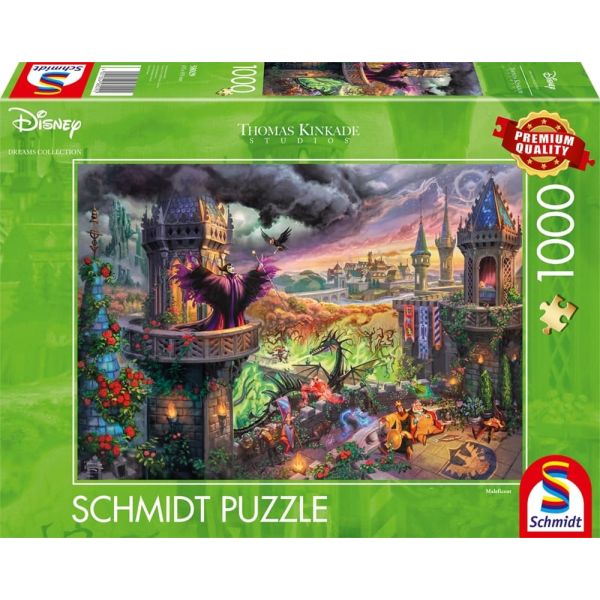
The classic format for collectors and families. 1,000-piece puzzles are also popular with adults, especially with motifs from well-known movie worlds – puzzling is no longer just a children's hobby.
Not Just the Number of Pieces Matters
The motif determines the difficulty. A picture with a lot of sky of the same color is significantly more difficult than a colorful busy scene with the same number of pieces. For younger children, the more contrasting and clearly structured, the better.
Piece size is more important than the print. Some puzzles for older children have very small pieces – impractical for children's hands, even if the number of pieces would be appropriate.
Material quality makes the difference. Well-punched pieces fit together cleanly and don't fray. Cheaply made puzzles lose their fit after a few attempts, and that's what frustrates children the most.
The favorite motif trumps almost everything. A child who receives a puzzle with their favorite character often shows more patience than with a neutral landscape motif. If you are torn between two options, in doubt, choose the motif your child loves.
Tips for More Puzzling Fun
Provide a stable surface where a started puzzle can remain – nothing is as demotivating as a puzzle that has to be put away for dinner. Puzzle together without doing the work for them: questions like "What color are you looking for right now?" help more than handing them the right piece. And with larger puzzles, always start with the border; it provides immediate structure.
Frequently Asked Questions
At what age can a child start puzzling? The first simple peg puzzles work from about two years old. The decisive factor is less age than the ability to grasp and rotate pieces purposefully.
How many pieces for a 6-year-old child? Typically 100 pieces. Experienced puzzlers at this age can also manage 200.
Are 1,000-piece puzzles still for children? From about twelve years old, yes – but often as a joint family project, not a solo task.
What to do if a piece is missing? Many manufacturers offer replacement pieces. Therefore, keep the box with the item number.
Finding the Right Puzzle In our puzzle selection you'll find motifs for every age – from simple children's puzzles to 1,000-piece motifs for fans. If you prefer playing together, you'll find something in the games section.

Written by Finesa Shala