Buying a School Backpack for Children: The Big Guide for Starting School
The start of school is approaching – and with it the perennial question: Which backpack is the right one? Between ergonomics, size, safety, and the inevitable desire for a favorite character, the selection is larger than it first appears. This guide shows you what really matters.
Why the right backpack is more than just an accessory
Children carry their backpacks five days a week, often for years. A poorly fitting model puts pressure on the shoulders, distributes weight unfavorably, and quickly becomes a burden for still-growing backs. A well-chosen backpack, on the other hand, distributes weight evenly, sits securely, and is gladly worn by the child – and that's the point many parents underestimate.
The right size by age
The rule of thumb is simple: The backpack should not be wider than the child's shoulders and should not sit lower than their hips.
Kindergarten and Preschool (3–6 years) Small backpacks about 25 to 30 cm high are sufficient here. They offer space for a lunch box, water bottle, and a plush toy – nothing more is needed at this age. Plush backpacks are particularly popular because they are soft and easy to carry.
Primary School (6–10 years) Now notebooks, books, and pencil cases are added. Models 34 to 40 cm high are the right choice here. Look for a separate compartment so that heavy books lie close to the back.
Secondary School (10+ years) From here on, it can be larger: 40 to 44 cm with multiple compartments, a padded laptop or tablet compartment, and sturdy zippers.
What to look for in ergonomics
A good children's backpack can be recognized by four details:
Padded, wide shoulder straps distribute the weight instead of concentrating it on a narrow point. Narrow straps cut in – especially with a full backpack.
A padded back panel prevents the edges of books or lunch boxes from digging in. Ideally, it is slightly contoured and breathable.
A chest strap significantly stabilizes the fit and prevents the straps from slipping off the shoulders. For active children, this small detail makes the biggest difference.
The backpack's own weight is often overlooked. A backpack that is already heavy when empty makes a full school bag unnecessarily burdensome. Less is indeed more here.
Road safety
In autumn and winter, many children go to school in the dark. Reflective elements on the front and sides ensure that your child is seen early in headlights. Make sure the reflectors are large and not just a small logo – bright colors further enhance the effect.
Material and workmanship
Durable polyester is the standard, and for good reason: it's lightweight, hard-wearing, and can be cleaned with a damp cloth. Also check the seams at the strap attachments – that's where the greatest stress occurs. A water-repellent material protects notebooks and books in the rain.
The underestimated factor: the motif
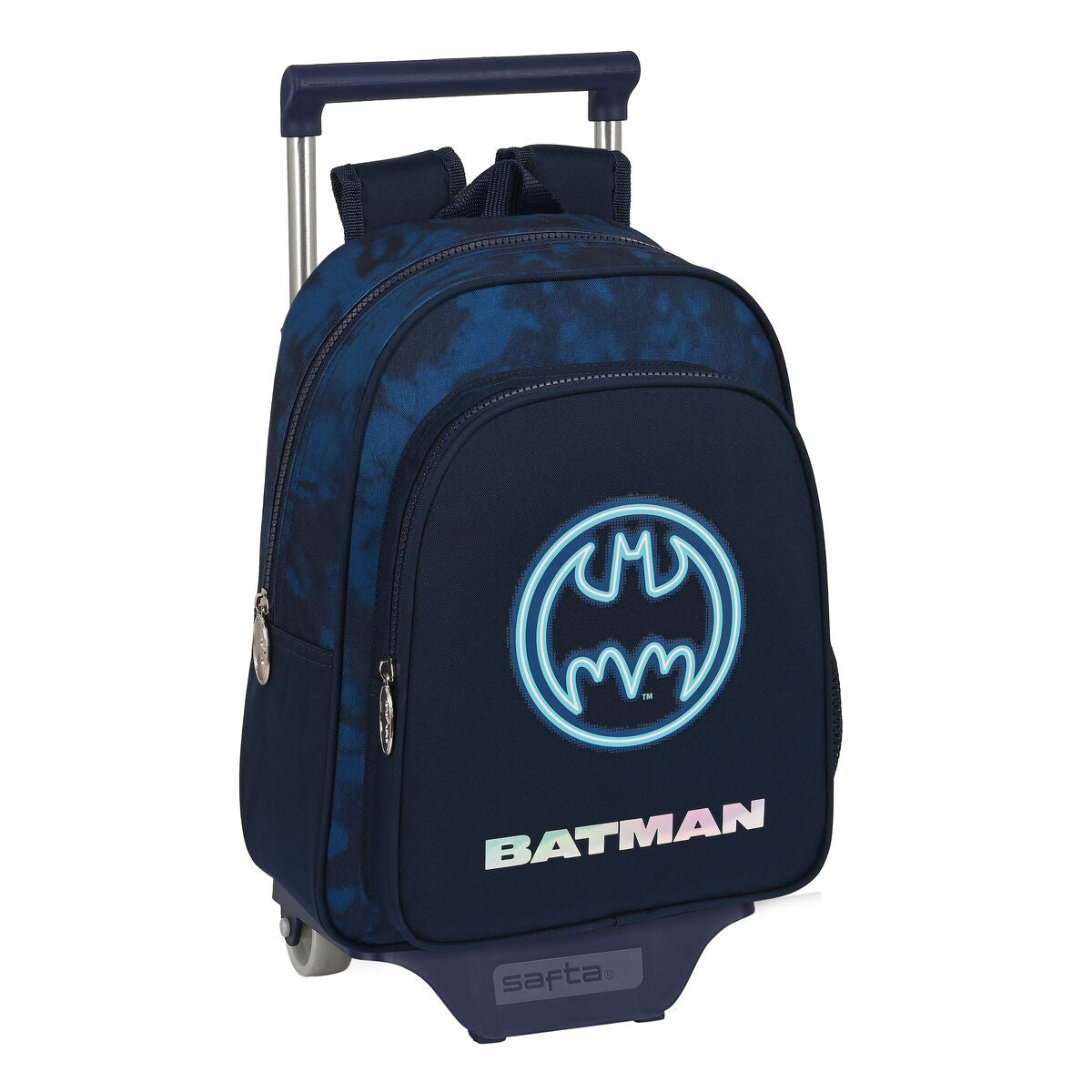
Opinions often differ here. Parents focus on ergonomics, children on the print. The good news: both are not mutually exclusive. A child who loves their backpack carries it more carefully, loses it less often, and goes to school with more motivation. So, the favorite character is not a compromise, but a real advantage.
Popular motifs have been stable for years: Disney and Stitch, Pokémon, Paw Patrol for the little ones, Harry Potter and Super Mario for older children. The important thing is that it is officially licensed merchandise – that way, print quality and colorfastness remain good even after many washes.
Checklist for buying
- Wide, padded shoulder straps
- Padded, breathable back panel
- Chest strap present
- Reflectors on front and sides
- Size appropriate for age
- Low intrinsic weight
- Sturdy zippers and seams
- Motif the child likes
Frequently Asked Questions
From what age is a backpack sensible instead of a satchel? Usually from the third or fourth grade. The classic satchel offers more stability for elementary school beginners, but older children often find it too childish.
How heavy can a full school backpack be? As a guideline: preferably not more than about ten to fifteen percent of the body weight. Regular decluttering helps more than any feature.
How often should a backpack be replaced? A good backpack lasts two to three school years. Replace it if the padding is flat, seams are tearing, or the child has outgrown it.
Ready for the start of school? Discover our selection of officially licensed school backpacks as well as matching pencil cases and stationery – from Stitch to Pokémon to Super Mario.

Written by Finesa Shala